|
More
from and about
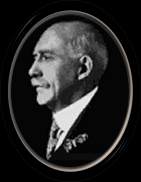
Orison Swett Marden
(biographical info at bottom of page) |
|
|
| |
|
There is no
medicine like hope, no incentive so great, and
no tonic so powerful as expectation of something tomorrow. |
| |
|
Every
experience in life, everything with which we have come in
contact in life, is a chisel which has been cutting away at our
life
statue, molding, modifying, shaping it. We are part of all we have
met. Everything we have seen, heard, felt or thought has had its
hand in molding us, shaping us.
|

|
| |
When we are sure that we are
on the right road there
is no need to plan our journey too far ahead. No need
to burden ourselves with doubts and fears as to the
obstacles that may bar our progress. We cannot take
more than one step at a time.
The universe is one great
kindergarten. Everything that exists has brought with it its own peculiar
lesson. The mountain teaches stability and grandeur; the ocean immensity and
change. Forests, lakes, and rivers, clouds and winds, stars and flowers,
stupendous glaciers and crystal snowflakes every form of animate or inanimate
existence, leaves its impress upon our soul.
|
| |
The universe
is one great kindergarten. Everything that exists has
brought with it its own peculiar lesson. The mountain
teaches
stability and grandeur; the ocean immensity and change.
Forests,
lakes, and rivers, clouds and winds, stars and flowers,
stupendous
glaciers and crystal snowflakes every form of animate or
inanimate
existence, leaves its impress upon our soul.
Our destiny changes with our thought; we shall become what
we
wish to become, do what we wish to do, when our habitual
thought corresponds with our desires.
|
| |
|
Your
outlook upon life, your estimate of yourself, your estimate of
your
value are largely colored by your environment. Your whole career
will be
modified, shaped, molded by your surroundings, by the character of
the
people whom you come in contact everyday.
|
|
| |
|
A good laugh makes us better friends with
ourselves and everyone around us. |
| |
|

|
|
quotations
- contents
-
welcome
page
- obstacles
- weblog
the
people behind the words
- our
current e-zine
- articles
and excerpts
Daily
Meditations, Year One - Year
Two - Year Three - Year
Four
Simple
and Profound website
Sign up for your free email daily
spiritual or general quotation
Sign
up for your free email daily meditation |
| |
|
What
keeps so many people back is simply unwillingness to pay the
price, to make the exertion, the effort to sacrifice their ease
and comfort. |
| |
|
Success
is not measured by what you accomplish but by
the opposition you have encountered, and the courage
with which you have maintained the struggle against
overwhelming odds. |
| |
|
The
golden opportunity you are seeking is in yourself. It is not
in your environment, it is not in luck or chance,
or the help of others; it is in yourself alone. |
| |
|

|
| |
Orison
Swett Marden, founder of Success Magazine, is also considered to
be the founder of the modern success movement in America. He
certainly bridged the gap between the old, narrow notions of
success and the new, more comprehensive models made popular by
best-selling authors such as Napoleon Hill, Clement Stone, Dale
Carnegie, Og Mandino, Earl Nightingale, Norman Vincent Peale, and
today's authors Stephen R.Covey, Anthony Robbins, and Brian Tracy.
Who was Orison Swett Marden?
He was the son of poor parents, born on a New England farm in
1850. He attended Boston University, and also Andover
Theological Seminary. Graduating from Boston University in 1871, he took an M.D. at
Harvard in
1881, an LL.B. degree, also at Harvard, in 1882, and studied at
the
Boston School of Oratory.
During his college days he worked at catering and hotel management
and
was so successful that he had some $20,000 in capital when he
finished
his formal training. Then he went to Block Island, near
Newport, Rhode
Island, and bought a property which he developed into a thriving
resort
area. Hardly a background, one would think, for a later
literary career. He went on to buy a chain of hotels in Nebraska, but in 1892 met
financial reverses and had to take employment once more as a hotel
manager in Chicago during the World's Fair of 1893. Then he
went back to Boston and started over again.
When he first met Samuel Smiles is not disclosed, but the English
writer became his first literary hero and inspired much that
Marden
wrote and accomplished. Smiles's Self-Help, which he
had found in an
attic and read, did much in the shaping of his career. He
once wrote,
"The little book was the friction which wakened the spark
sleeping in
the flint." Later of course he also read Emerson,
Oliver Wendell Holmes,
Longfellow, Phillips Brooks, and others, but Smiles was the
"awakener."
It became his ambition, he says, to become the Samuel Smiles of
America, and there is little doubt that he achieved his ambition.
On his return to Boston, he began to try to put together his
ideas,
particularly concerning optimism, which was to be a central theme
in his
writings -- incidentally also a central theme in New
Thought. While
most of his books make little or no mention of religion, some
do. Marden
was rather a writer of essentially New Thought faith than a writer
technically on New Thought as such. Actually he was for
several years
president of the League for a Higher Life, A New Thought
organization in
New York City of which Eugene del Mar was for many years the
effective
leader, and of which Robert H. Bitzer, longtime president of the
INTA,
was one time secretary.
Marden's first book, Pushing to the Front, published in
1894, had a
phenomenal circulation. In 1897 he founded Success
Magazine, which
reached the enormous circulation, for that time, of nearly a
half-million, meaning of course that it was read by from two to
three
million readers. This publication ran into financial
difficulties and
suspended publication in 1912. But once again, in 1918, he
founded a new Success which was rapidly climbing in
circulation when death ended his career in 1924.
His book titles express eloquently the outlook of cheerful
optimism and
confidence. At his death it was said of him that he averaged
two books a year, from his first in 1894 to his last just before
his passing in 1924, and had some two million words in as yet
unpublished manuscripts
when he died. His writings are definitely in the New Thought
tradition,
though, in common with those of Ralph Waldo Trine, another
prolific
author of this period, they wear a cloak of orthodoxy which
enabled them to reach a far larger readership than many other
authors in this field.
Marden was a definite and highly influential figure, whether
consciously or not, in the outreach of New Thought ideas into the
general culture of his time.
|
| |
|
|
| |
|

|
We
have some
inspiring and motivational books that may interest you. Our main way of supporting this site is
through the sale of books, either physical copies
or digital copies for your Amazon Kindle (including the
online reader). All of the money that we earn
through them comes back to the site
in one way or another. Just click on the picture
to the left to visit our page of books, both fiction and
non-fiction! |
|
| |
|

|
|