|
More
from and about
Elisabeth Kuebler-Ross
(biographical info at bottom of page) |
|
|
| |
|
It's
only when we truly know and understand that we have
a limited time
on earth - and that we have no way of knowing
when our time is up, we will
then begin to live each day
to the fullest, as if it was the only one we had. |
| |
|
We all have to
go through the tumbler a few times before we can emerge as a
crystal.
|
|
| |
|
I
say to people who care for people who are dying, if you really
love that person and want to help them, be with them when
their end comes close. Sit with them--you don't even have to talk.
You don't have to do anything but really be there with them.
|
| |
We
need to teach the next generation of children from day
one
that they are responsible for their lives. Humankind's greatest gift,
also its greatest curse, is that we have
free choice. We can make our choices built from love
or from fear.
I
have never met a person whose greatest need was
anything other than real, unconditional love. You can
find it in a simple act of kindness toward someone who
needs help. There is no mistaking love. You feel it
in your heart. It is the common fiber of life, the flame
that heals our soul, energizes our spirit and supplies passion
to our lives. It is our connection to God and to each other.
|
| |
|
To love
means not to impose your own powers on your fellow
people but
offer them your help. And if they refuse it, to be
proud that they can do it on their own strength.
You
will not grow if you sit in a beautiful flower garden,
but you will grow if you are sick, if you are in pain, if you
experience losses, and if you do not put your head in the sand,
but take the pain as a gift to you with a very, very specific purpose.
|
|
| |
|
It
is not the end of the physical body that should worry us. Rather, our concern
must be to live while we're alive - to
release our inner selves from the spiritual
death that comes
with living behind a facade designed to conform to external
definitions of who and what we are.
|
| |
|
|
|
quotations
- contents
-
welcome
page
- obstacles
- weblog
the
people behind the words
- our
current e-zine
- articles
and excerpts
Daily
Meditations, Year One - Year
Two - Year Three - Year
Four
Simple
and Profound website
Sign up for your free email daily
spiritual or general quotation
Sign
up for your free email daily meditation |
| |
|
The
ultimate lesson all of us have to learn is unconditional love,
which includes not only others but ourselves as well. |
| |
|
The
most beautiful people we have known are those
who have known
defeat, known suffering, known struggle,
known loss, and have found
their way out of the depths.
These persons have an appreciation, a
sensitivity and
an understanding of life that fills them with compassions,
gentleness, and a deep loving concern. Beautiful people do not just happen. |
| |
|
Learn
to get in touch with the silence within yourself,
and know that
everything in life has purpose. There are no mistakes, no
coincidences, all events
are blessings given to us to learn from. |
| |
|

|
| |
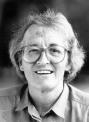
Elisabeth
Kuebler-Ross was born in Switzerland in 1926. She was part
of a package deal--a triplet (and a two-pounder at that).
That she survived the birth (as did her two sisters, another two-pounder
and a more robust six-pounder) is something of a miracle. As
she explains, her early childhood was filled with other more
memorable experiences around death as well, including a long
battle with pneumonia and deathbed scenes of neighbors in her
small town.
In the aftermath of World War II, she was a volunteer in IVSP,
International Voluntary Service for Peace. She spent time in
Poland and
then Germany, aiding survivors of the concentration camps, as well
as
the defeated Germans, to rebuild their lives. She returned
to Switzerland and went to medical school, eventually marrying an
American student studying there.
After practicing as a small town family doctor, she came to the
U.S. in
the 1950s. Her plans to serve a residency in pediatrics were
changed to
psychiatry (because they didn't want someone who was
pregnant). In
Denver, after residency, she was asked to lecture to medical
students. She chose a topic that was out of the ordinary, but something she
felt
at home with--death and dying.
In 1965, in Chicago, she continued her work in this area. At
the urging
of some theology students she began a weekly seminar with dying
patients, health professions students, and (eventually) their
more
skeptical teachers. This experience led to the publication,
in 1969, of
her book, On Death and Dying. It is in this book that
the "stages" of
dying are discussed.
She passed away on August 24, 2004. |
| |
|
|
| |
|

|
We
have some
inspiring and motivational books that may interest you. Our main way of supporting this site is
through the sale of books, either physical copies
or digital copies for your Amazon Kindle (including the
online reader). All of the money that we earn
through them comes back to the site
in one way or another. Just click on the picture
to the left to visit our page of books, both fiction and
non-fiction! |
|
| |
|

|
|