|
More
from and about
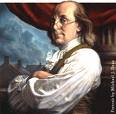
Benjamin Franklin
(biographical info at bottom of page) |
|
|
| |
|
God
grant that not only the love of liberty but a thorough
knowledge
of the rights of people may pervade all the nations of the
earth,
so that a philosopher may set his foot anywhere on its
surface and
say: This is my country.
To be
thrown upon one's own resources is to be cast into
the
very lap of fortune, for our faculties then undergo
a
development and display an energy of which
they were
previously unsusceptible.
|

|
| |
If you would not be forgotten
As soon as you are dead and rotten,
Either write things worthy reading,
Or do things worth the writing.
|
| |
|
Educate your
children to self-control, to the habit of holding passion
and prejudice and evil tendencies subject to an upright and
reasoning
will, and you have done much to abolish misery from their
future and
crimes from society.
|
| |
|
Those
that are of the opinion money will do everything may well be
suspected
of doing everything for money.
I am for
doing good to the poor, but. . .I think the best way of doing good
to the poor, is not making them easy in poverty, but leading or
driving them
out of it. I observed...that the more public provisions were made
for the poor,
the less they provided for themselves, and of course became
poorer. And,
on the contrary, the less was done for them, the more they did for
themselves, and became richer.
|
|
| |
|
Justice will not be served until those who are
unaffected are as outraged as those who are. |
| |
|

|
|
quotations
- contents
-
welcome
page
- obstacles
- weblog
the
people behind the words
- our
current e-zine
- articles
and excerpts
Daily
Meditations, Year One - Year
Two - Year Three - Year
Four
Simple
and Profound website
Sign up for your free email daily
spiritual or general quotation
Sign
up for your free email daily meditation |
| |
|
Sloth
makes all things difficult, but industry, all things easy.
They that rise
late must trot all day, and shall scarce overtake their business
at night, while
laziness travels so slowly that poverty soon overtakes them. |
| |
|
Dost thou love life? Then do not squander time,
for that's the stuff life is made of. |
| |
|
The
person who deserves most pity is a lonesome one
on a rainy day who doesn't know how to read. |
| |
|

|
| |
|
Benjamin Franklin (January 17, 1706 – April 17, 1790) was
one of the Founding Fathers of the United States of America. A noted
polymath, Franklin was a leading author and printer, satirist,
political theorist, politician, scientist, inventor, civic activist,
statesman and diplomat. As a scientist he was a major figure in the
Enlightenment and the history of physics for his discoveries and
theories regarding electricity. He invented the lightning rod,
bifocals, the Franklin stove, a carriage odometer, and a musical
instrument. He formed both the first public lending library in
America and first fire department in Pennsylvania. He was an early
proponent of colonial unity and as a political writer and activist
he, more than anyone, invented the idea of an American nation and as
a diplomat during the American Revolution, he secured the French
alliance that helped to make independence possible.
Born in Boston, Massachusetts, Franklin learned printing from his
older brother and became a newspaper editor, printer, and merchant
in Philadelphia, becoming very wealthy, writing and publishing Poor
Richard's Almanack and the Pennsylvania Gazette. Franklin
was interested in science and technology, and gained international
renown for his famous experiments. He played a major role in
establishing the University of Pennsylvania and Franklin &
Marshall College and was elected the first president of the American
Philosophical Society. Franklin became a national hero in America
when he spearheaded the effort to have Parliament repeal the
unpopular Stamp Act. An accomplished diplomat, he was widely admired
among the French as American minister to Paris and was a major
figure in the development of positive Franco-American relations.
From 1775 to 1776, Franklin was Postmaster General under the
Continental Congress and from 1785 to 1788 was President of the
Supreme Executive Council of Pennsylvania. Toward the end of his
life, he became one of the most prominent abolitionists.
Franklin's colorful life and legacy of scientific and political
achievement, and status as one of America's most influential
Founding Fathers, has seen Franklin honored on coinage and money;
warships; the names of many towns, counties, educational
institutions, namesakes, and companies; and more than two centuries
after his death, countless cultural references.
from Wikipedia |
| |
|
|
| |
|

|
We
have some
inspiring and motivational books that may interest you. Our main way of supporting this site is
through the sale of books, either physical copies
or digital copies for your Amazon Kindle (including the
online reader). All of the money that we earn
through them comes back to the site
in one way or another. Just click on the picture
to the left to visit our page of books, both fiction and
non-fiction! |
|
| |
|

|
|