|

19 October 2026
| |
|
|
| |
|
Simple and Profound
Thoughts
(from Simple
and Profound) |
|
Laughter
lifts us over high ridges and lights up dark valleys in a way that
makes life so much easier. It is a priceless gem, a gift of
release and healing direct from Heaven. -
Alan
Cohen
|
A
loving person lives in a loving world.
A hostile person lives in a hostile world:
everyone you meet is a mirror. -
Ken
Keyes, Jr.
|
|
Miracles are not in contradiction to
nature. They are only
in contradiction
with what we
know of nature. -
St. Augustine
|
The
place in which you find yourself isn't
nearly as important as where you place
your attention while you are there. -Stephen
C. Paul
|
|
| |
|

|
| |
|
from
The Measure of Our Success
Marian Wright Edelman
Lesson Four: Never work just for money or for
power. They won't save your soul or build a decent
family or help you sleep at night. We are the
richest nation on earth, yet our incarceration, drug
addiction, and child poverty rates are among the highest
in the industrialized world. Don't condone or
tolerate moral corruption whether it's found in high or
low places, whatever its color. It is not okay to
push or use drugs even if every person in America is doing
it. It is not okay to cheat or lie even if countless
corporate or public officials and everybody you know
do. Be honest. And demand that those who
represent you be honest.
Don't confuse legality with morality. Dr. King noted
that everything Hitler did in Nazi Germany was
legal. Don't give anyone the proxy for your
conscience. And don't confuse morality with
fairness. The policies that took tens of billions of
dollars from the poor and middle class and gave them to
the very rich in the 1980's as tax loopholes and capital
gains were legal. But they were not just. . . .
Somehow we are going to have to develop a concept of enough
for those at the top and bottom so that the necessities of
the many are not sacrificed for the luxuries of the
few. I do not begrudge billionaires or millionaires
their incomes as long as children's basic needs of food
and health and shelter and child care and education are
met.
But something's out of balance when the number of
millionaires in the 1980s almost doubled and the number of
poor children increased by three million--almost 30
percent--and children and the poor still face a vastly
uneven playing field in the budget process compared with
the military and the wealthy. . . .
|
|
|
Lesson Five: Don't be afraid of taking risks or of
being criticized. An anonymous sage said, "If
you don't want to be criticized don't say anything, do
anything, or be anything." Don't be afraid of
failing. It's the way you learn to do things
right. It doesn't matter how many times you fall
down. What matters is how many times you get
up. And don't wait for everybody else before you do
something. It's always a few people who get things
done and keep things going. This country needs more
wise and courageous shepherds and fewer sheep.
As a young civil rights lawyer in Mississippi, I remember
wanting to provide solace to a beleaguered Dr. King, who
was being attacked by friend and foe alike for speaking
out against the Vietnam War. I mailed him Theodore
Roosevelt's statement: "It's not the critic who
counts. Not the man who points out where the strong
man stumbled or where the doer of great deeds could have
done them better. The credit belongs to the man who
is actually in the arena. whose face is marred by
dust and sweat and blood. Who strives valiantly, who
errs and comes up short again and again. And who,
while daring greatly, spends himself in a worthy cause so
that his place may be not among those cold and timid souls
who know neither victory nor defeat."
My youthful gesture of encouragement was not needed by a
man who answered his critics in The Trumpet of
Conscience with such clarity of mission and
courage: "For those who ask the question,
'Aren't you a civil rights leader?'--and thereby mean to
exclude me from the movement for peace--I answer by saying
that I have worked too long and hard now against
segregated public accommodations to end up segregating my
moral concern. Justice is indivisible. It must
also be said that it would be rather absurd to work
passionately and unrelentingly for integrated schools and
not be concerned about the survival of a world in which to
be integrated."
|
|
more
thoughts and ideas on life
|
|
| |
|
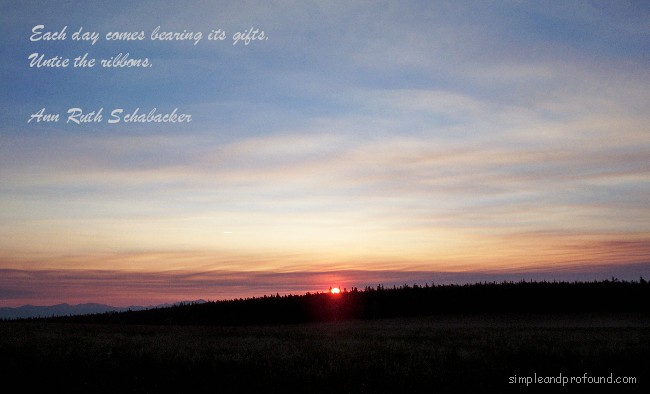
(Simple and Profound is now a
part of this site. Visit by clicking
here.)
|
|
quotations
- contents
-
welcome
page
-
obstacles
- weblog
the
people behind the words
-
our
current e-zine
-
articles
and excerpts
Daily
Meditations, Year One - Year
Two - Year Three
- Year Four
Simple
and Profound website
Sign up for your free email daily
spiritual or general quotation
Sign
up for your free email daily meditation
|
| |
|
|
| |
|

|
We
have some
inspiring and motivational books that may interest you. Our main way of supporting this site is
through the sale of books, either physical copies
or digital copies for your Amazon Kindle (including the
online reader). All of the money that we earn
through them comes back to the site
in one way or another. Just click on the picture
to the left to visit our page of books, both fiction and
non-fiction! |
|
| |
|

|
| |
Personal
Philosophy Is like the Set of the Sail
Jim Rohn
In the process of living, the winds of circumstances
blow on us all in an unending flow that touches each
of our lives.
We have all experienced the blowing winds of
disappointment, despair and heartbreak. Why,
then, would each of us, in our own individual ship
of life, all beginning at the same point, with the
same intended destination in mind, arrive at such
different places at the end of the journey?
Have we not all been blown by the winds of
circumstances and buffeted by the turbulent storms
of discontent?
What guides us to different destinations in life is
determined by the way we have chosen to set our
sail. The way that each of us thinks makes the
major difference in where each of us arrive.
The major difference is the set of the sail.
The same circumstances happen to us all. We have
disappointments and challenges. We all have
reversals and those moments when, in spite of our
best plans and efforts, things just seem to fall
apart. Challenging circumstances are not
events reserved for the poor, the uneducated or the
destitute. The rich and the poor have marital
problems. The rich and the poor have the same
challenges that can lead to financial ruin and
personal despair.
In the final analysis, it is
not what happens that determines the quality of our
lives, it is what we choose to do when we have
struggled to set the sail and then discover, after
all of our efforts, that the wind has changed
directions.
When the winds change, we must change. We must
struggle to our feet once more and rest the sail in
the manner that will steer us toward the destination
of our own deliberate choosing. The set of the
sail, how we think and how we respond, has a far
greater capacity to destroy our lives than any
challenges we face. How quickly and
responsibly we react to adversity is far more
important than the adversity itself. Once we
discipline ourselves to understand this, we will
finally and willingly conclude that the great
challenge of life is to control the process of our
thinking.
Learning to reset the sail with the changing winds
rather than permitting ourselves to be blown in a
direction we did not purposely choose requires the
development of a whole new discipline. It
involves going to work on establishing a powerful,
personal philosophy that will help to influence in a
positive way all that we do and that we think and
decide. If we can succeed in this worthy
endeavor, the result will be a change in the course
of our income, lifestyle and relationships, and in
how we feel about the things of value as well as the
times of challenge. If we can alter the way we
perceive, judge and decide upon the main issues of
life, then we can dramatically change our lives.
* * * * *
Reproduced
with permission from the Jim Rohn Weekly E-zine.
|
|
| |
|

|
|
Living
Life Fully, the e-zine
exists to try to provide for visitors of the world wide web a
place
of growth, peace, inspiration, and encouragement. Our
articles
are presented as thoughts of the authors--by no means do
we
mean to present them as ways that anyone has to live
life. Take
from them what you will, and disagree with
whatever you disagree
with--just know that they'll be here for you
each week. |
|
| |
|
As
One Soweth
We must not
hope to be mowers,
And to gather the ripe gold ears,
Unless we have first been sowers
And watered the furrows with tears.
It is not just as we take it,
This mystical world of ours,
Life's field will yield as we make it
A harvest of thorns or of flowers.
Johann
Wolfgang von Goethe
|
| |

|
The
Yearning for Silence
It was beautiful here
this afternoon--cool and quiet, a perfect autumn
day. The sun was shining, so it wasn't too
cool, and there was a gentle breeze that was just the
perfect kind for coming in the window and making me feel
that all is right with the world.
And then a neighbor across the alley started clearing
the leaves in his back yard with an extremely loud
blower. The silence was gone. We had to
close our windows to shut out the noise, so the
beautiful breeze was gone--and we could still hear the
blower. We couldn't hear any more birds singing,
and the whole feeling of the day took a different turn.
And he was out there for two full hours, destroying the
silence of the day completely.
Somehow we've become a society in which other people's
rights to things like peace and quiet have become
irrelevant to most people. I remember when I
bought a push lawn mower because I didn't want to
disturb the entire neighborhood whenever I mowed our
rather small lawn. The first time I mowed the lawn
with it--a brand-new mower--my neighbor from across the
street came over and asked if I wanted to borrow his
power mower. The idea that someone can want to do
something in a way that doesn't disturb other people
never even occurred to him. And I still rake
leaves because I enjoy the process and because I enjoy
the sounds of crisp leaves being pulled up and moved by
the rake; it's a sound that I never would hear at all if
I were using a power blower.
|
|
|
|
Silence
is something like an endangered species. The experience
of
silence
is now so rare that we must guard it and treasure it.
Gunilla
Norris
|
|
|
It used to be that
noise was a thing of youth, of people who haven't
grown up enough yet to realize the value in
silence. We could count on young people to
make noise--listen to kids play sometime--but they
would quiet down when asked to do so.
Nowadays, though, much of the noise we have to
suffer through comes from adults who either don't
think about the fact that they're disturbing the
peace and quiet of others or simply don't care.
The value of silence is something that I've had to
learn about through long experience, through trial
and error. I used to think that music was best
loud (and sometimes, it actually is), something to
be shared with others. The way I grew up, I
also used to think that music had to be constant,
too--it had always been a faithful companion to me,
and there was a part of me that didn't want to give
up that companionship. But time and experience
have taught me that often, silence is the best thing
that can happen to me.
When I find myself in silence and I feel the urge to
turn on the stereo (I consider myself fortunate
because I never have the urge to turn on the
television), I now often weigh my options--do I
really need the music, or is the silence more
important to me right now? Very often, I go
with the silence, and when I do, it's a very nice
feeling. (Don't get me wrong, though--when I
decide to turn on the music, that's a nice feeling,
too!) The silence allows me to think properly,
with no distractions--it allows me to entertain a
thought and follow through with it, without having
my mind jump to the lyrics or the guitar solo in the
song I'm listening to.
|
|
|
|
Silence stands
outside
the
world of profit
and utility.
It cannot be exploited for profit;
you cannot get anything
out
of it. It is "unproductive,"
therefore it is
regarded
as useless. Yet there
is more help and healing
in silence
than in
all useful things.
Max Picard
|
|
|
As far as work is
concerned, silence is usually the most productive
environment for me. That depends, of course,
on the work that I'm doing. If it's something
that demands highly concentrated thinking, then
silence is extremely helpful. If it's a job
that's repetitive and somewhat tedious, then music
helps the time to go by faster, and it helps me not
to get so bored that the quality of my work
slips. I remember working in a factory that
produced thousands of one particular product--my job
was quality control and counting the little orange
things for packaging. There was always music
on in that factory, and I was very grateful for that
fact. Of course, in the factory with the
machinery going constantly, silence wasn't exactly
an option.
We have a mistaken idea about silence, too--it isn't
the complete absence of noise. One of the
things that I love about running is that it takes me
to places that are extremely quiet. I often
run or hike for a couple of hours to get to remote
lakes and streams in the mountains or deserts, and
the silence that I experience there is a special
treat indeed. But it's not absolute
silence. I can still hear the breezes in the
trees and the songs of the birds. I can hear
bugs and the sound of rushing water or water lapping
up on the shore, but those sounds most definitely
don't disturb the silence of the place--they're an
integral part of the place.
|
|
|
I think that silence
would be a wonderful gift to give, if such a thing
were possible. I would truly love to package
it up and give it to someone who needed it in their
lives. I know that it would be a valuable gift
for just about anyone, except for people who fear
silence--and I've met many such people.
They're unable to be alone in a silent room.
They have to turn on the television or the radio,
just to have some sound in the room with them.
I feel bad for them because they're never able to
experience just how wonderful silence can be.
We have friends with young children, and often we'll
"borrow" their kids and take them to a
movie, partly to give the kids a treat, but also
partly to give the parents a chance to experience a
bit of peace and quiet for a few hours. They
love their kids, of course, but it's very nice for
them to have some stillness in their lives every now
and then.
How do you deal with silence? Do you make it
an important part of your life, or do you neglect it
and cover it up with noise? Is it something
that you enjoy, or something that you fear?
While some distractions can be enjoyable and even
beneficial, it's important that we keep in mind the
fact that silence, more than almost anything else,
can help us to reflect and to find those deeper
parts of ourselves that we tend to neglect when
we're surrounded by sound and noise. When we
search out silence, we search out depth and
understanding, and that can help us to lead fuller,
healthier, and more fulfilling lives.
|
|
More
on silence.
|
|
|
|
|
| |
|
|
| |
|
 ™ ™
|
|
All contents
© 2026 Living Life Fully™,
all rights reserved.
Please feel
free to re-use material from this site other than
copyrighted articles--
contact each author for permission to use those.
If you use material, it would be
greatly appreciated if you would provide credit and
a link back to the original
source, and let us know where the material is
published. Thank you. |
|
| |
|

|
|
Opportunities
do not come with
their values stamped
upon them.
Every one must be
challenged. A day
dawns, quite like other days;
in it a single hour
comes quite like
other hours; but in that day
and
in that hour the chance
of a lifetime faces us.
Maltbie D.
Babcock
|
|
| |
|
The
Trouble Tree
unattributed
The
carpenter I hired to help me restore an old farmhouse
had just finished a rough first day on the job. A flat tire
made him lose an hour of work, his electric saw quit,
and then his old pickup truck refused to start.
While
I drove him home, he sat in stony silence. On arriving,
he invited me in to meet his family. As we walked
toward the front door, he paused briefly at a small tree,
touching the tips of the branches with both hands. When he opened the door he underwent an amazing transformation.
His tanned face was wreathed in smiles and he hugged
his two small children and gave his wife a kiss.
Afterward,
he walked me to the car. We passed the tree
and my curiosity got the better of me. I asked him about
what I had seen him do earlier.
"Oh,
that's my trouble tree," he replied. "I know I can't
help having troubles on the job, but one thing is for sure,
troubles don't belong in the house with my wife and
children. So I just hang them up on the tree every night
when I come home. Then in the morning I pick them up again."
"The
funny thing is," he smiled, "when I come out
in the morning to pick them up, there aren't nearly as many
as I remember hanging up the night before."
Everybody
needs a trouble tree.
|
|
| |
|
|
|
| |
|
Life
is full of giving and taking. If the giving is more than the
taking, then by just that much the individual rises towards a higher
life.
Julian
P. Johnson
|
| |
|